


Dubai has become one of the most sought-after destinations among families, professionals and entrepreneurs, making expat life in Dubai an increasingly popular choice for those seeking new opportunities. A tax-free lifestyle, modern infrastructure and a diversified community make Dubai popular with people from all over the world.
However, moving to another country always requires some adjustment. Understanding the costs of living, cultural norms, and the best localities makes the process easier. This guide focuses on the essential things that expats should be aware of before moving.
Why Dubai Attracts Expats from Around the World
Dubai is home to a large expatriate community and expats constitute the majority of its population. The diversity brings together different cultures, cuisines, and lifestyles not often found in one location.
Multiple factors continue to attract families and professionals to Dubai. Tax-free income can help people save more money compared with what they could save in their home country. Low crime rates also appeal to families and people moving alone.
In addition, the city has modern infrastructure, efficient public transport, health facilities and schools, which makes day-to-day living easier. The city economy also offers job opportunities in many sectors like finance and banking, tourism, technology and trade businesses. The city has easy access to Europe, Asia and Africa, an ideal location for trade and business.
These advantages are an important part for expats living in Dubai. However, it’s also crucial to be aware of the cost and challenges prior to making the move.
Cost of Living in Dubai for Expats
Living in Dubai brings a mix of costs that vary widely based on your lifestyle, the place you reside, and the family size. Dubai’s cost of living is comparatively less than in cities like London and New York for certain expenses, but housing could be quite costly.
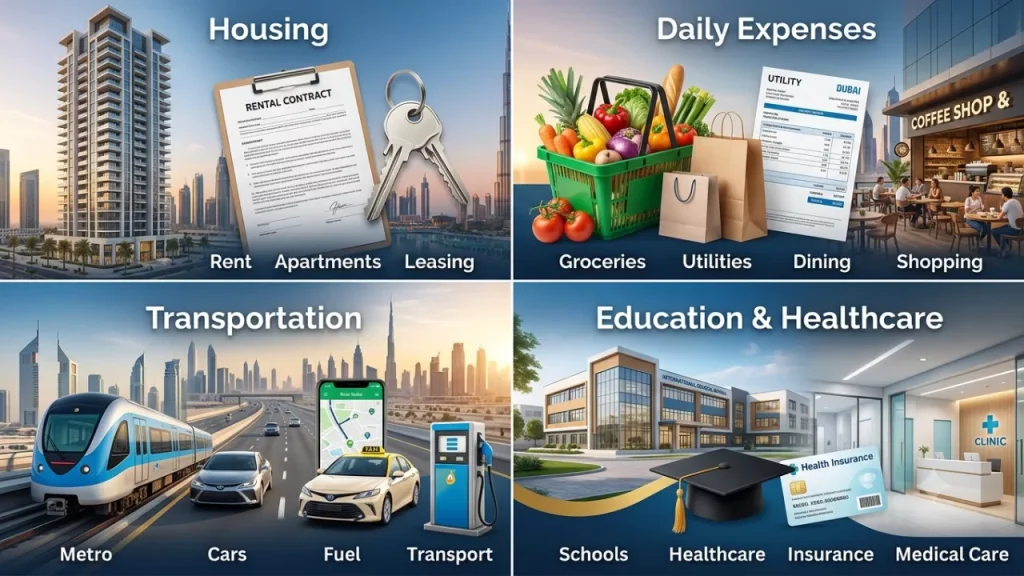
Housing Costs
Rent is often the most expensive monthly cost. An apartment with a single bedroom in the central region could range from AED 60,000 to AED 90,000 per year and similar homes in the suburbs can be considerably less.
Many landlords still require payment by post-dated cheques, generally in four to six installments over the course of a year. Housing is an important factor to consider when preparing your monthly budget.
Daily Expenses
Costs for groceries are similar to the prices in many Western cities. However, imported goods tend to be on the higher side than local food items. The dining experience varies, ranging from affordable street food to expensive luxury restaurants. The cost of utility bills, which includes electricity, may rise in the summer due to the heavy use of air conditioning.
Transportation
Dubai has a highly efficient metro system along with easy access to buses and ride-hailing apps. Many expats decide to purchase or lease cars, particularly in areas that aren’t served by the metro. Fuel prices are also low compared with other countries.
Education and Healthcare
International schools are widely accessible in Dubai. However, they can be expensive for some families. The annual fees vary based on the school type and its curriculum. Private healthcare is generally effective and high-quality and most of the employers offer healthcare insurance in their benefits package.
Common Challenges of Expat Life in Dubai
While Dubai offers many benefits, newcomers should also be aware of the practical and cultural challenges of moving there.
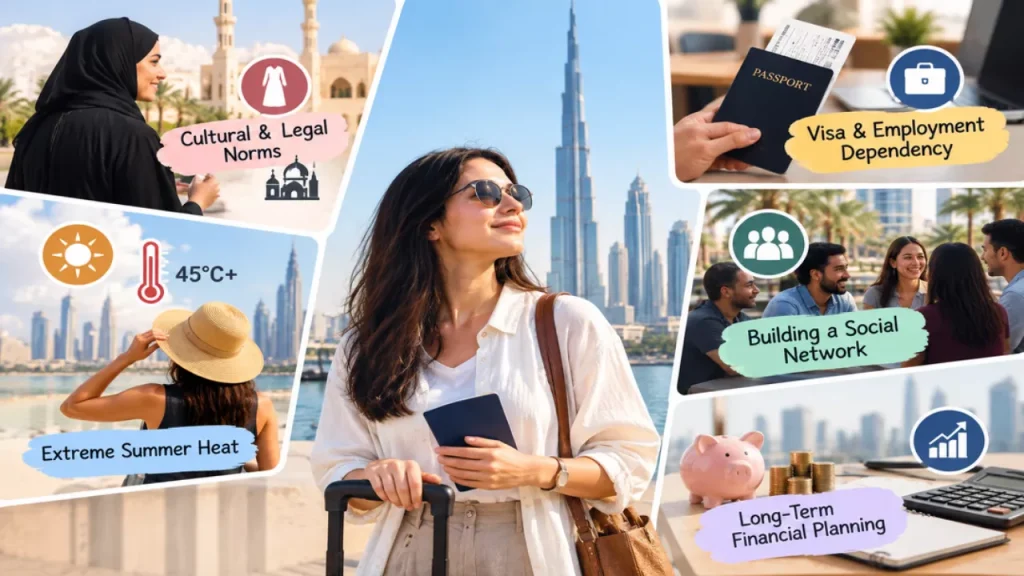
Adapting to Cultural and Legal Norms
The UAE has its own rules and expectations regarding culture that differ from the norms of many nations. Newcomers should be aware of their behavior in public as well as dress codes for certain areas, and local customs during religious periods such as Ramadan.
Visa and Employment Dependency
The majority of residency visas are linked to employment, which means that losing a job can directly impact a person’s residency status. That is why expats could rely more on their employment, compared with people living under more flexible immigration systems.
Managing Extreme Summer Heat
Temperatures in summer typically exceed 45°C, which restricts outdoor activities for several months. A lot of residents alter their routines by spending more time in indoor gyms and malls and plan outings in the evening.
Building a Social Network
As many expats relocate to Dubai for a short period, making lasting connections takes some time. Social groups, professional networking events and social clubs could assist in this process.
Long-Term Financial Planning
Many expats do not qualify for the UAE’s public pension benefits available to eligible Emirati citizens, so long-term financial planning is important.
Best Expat-Friendly Areas in Dubai
The right neighborhood has a huge effect on your living experience in Dubai. There are areas that suit different budgets, lifestyles and family needs.
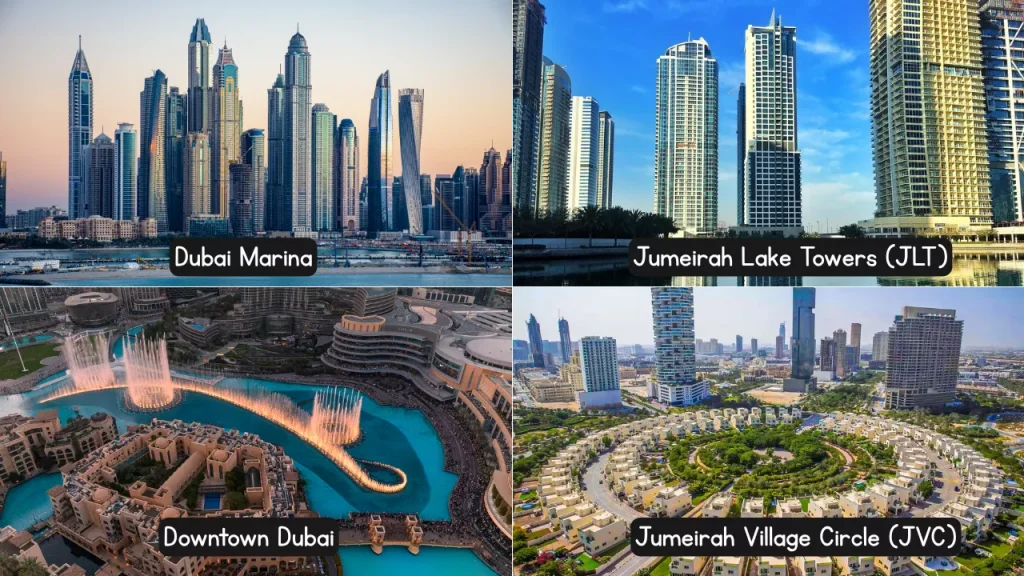
Dubai Marina
Dubai Marina is the preferred choice for young professionals and families. The waterfront lifestyle, pedestrian-friendly promenades, and lively nightlife. High-rise apartments are common and many of them have ocean or marina views.
Jumeirah Lake Towers (JLT)
Jumeirah Lake Towers is an affordable alternative to Marina while still offering modern homes, parks, lakes and metro accessibility. It is a popular choice for people who work in the area and small families.
Downtown Dubai
Downtown is home to the Burj Khalifa and Dubai Mall. It is perfect for those who want high-end living close to the major tourist landmarks. Rents are usually higher due to its prime location.
Arabian Ranches and Jumeirah Village Circle (JVC)
Families prefer homes in suburban areas such as Arabian Ranches, as they provide ample space and family-oriented amenities. For a more limited budget, Jumeirah Village Circle provides good housing at a reasonable price, and with rapidly developing community facilities.
Deira and Bur Dubai
These older, culturally rich areas are favored by expats seeking a more traditional feel, affordable rent and close proximity to souks, historical sites and local markets.
Practical Tips for a Smooth Transition
The process of moving into a new nation is easier with proper preparation. Keep these practical tips in mind:
- Research neighborhoods: Check various areas prior to signing a lease to avoid the hassle and expense of having to move later.
- Learn about visa requirements: Read the terms of visa sponsorship prior to accepting an offer of employment to ensure that you are not confused regarding your residency status.
- Create an account with a local bank: Open an account early to make payment for salary and manage bills more easily.
- Join community groups: Connect with local community groups for valuable information, tips and assistance.
- Budget your finances: Plan for the annual rent payment and school fees in advance to reduce financial strain for the first year.
These steps are a sensible starting point for anyone looking to create a life of long-term living in Dubai.

Conclusion
Life as an expat in Dubai provides various job opportunities along with modern living and diverse cultures. However, moving to a foreign country needs pre-planning and proper preparation. Understanding the costs of living, visa requirements, cultural expectations and expat-friendly areas will help immigrants to live a better life there. If you want to have a smooth transition and a rewarding life as an expat in Dubai, it’s important to plan well and sort out a budget.
- 7 Practical Ways to Save Money in UAE Without Sacrifice
- Average Salary in UAE 2026 Explained: Why Earnings Feel Small
- Best Bank Accounts in UAE for Expats (No Hidden Fees)

