

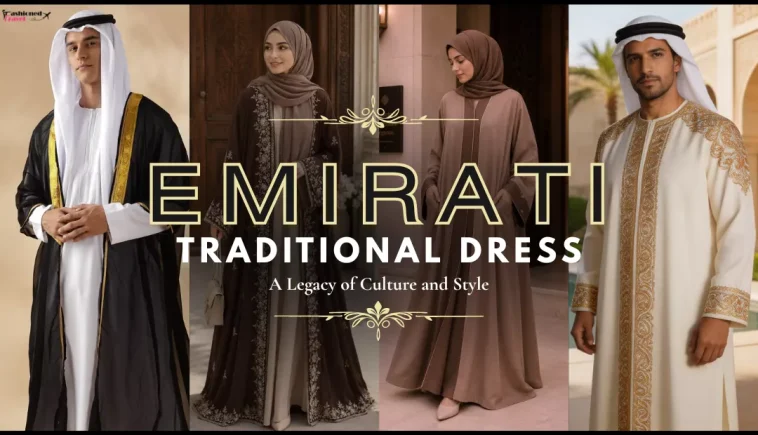
Emirati traditional clothing is a significant part of the UAE’s cultural identity. The Emirati traditional dress worn by men and women reflects modesty, practicality, craftsmanship, and national heritage. The most familiar examples are that men wear a white kandura, while women wear a black abaya.
The traditional dress has evolved over time. Modern clothing, upgraded materials, tailoring, colors, and decorative details have influenced the current national dress, which still incorporates many familiar elements associated with the Emiratis’ heritage.
Cultural Significance of Emirati Traditional Dress
The term Emirati traditional dress refers to the traditional clothing associated with Emirati culture that has been worn historically and is still popular today, especially during festive, cultural, religious, and public holidays.
Men’s traditional clothing includes a long kandura robe, which is usually worn with a ghutra and agal. A bisht is also traditionally worn by men for special occasions. The traditional clothing of women is the abaya and Shayla, while other traditional dresses for women include thawb, sirwal, and burqa.
Emirati Traditional Dress for Men
The Traditional Emirati Kandura
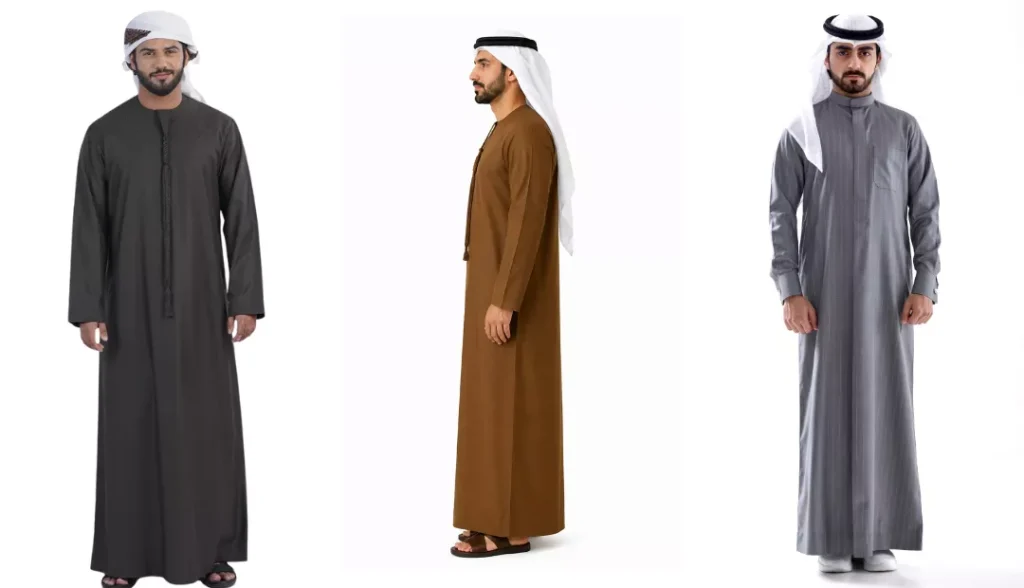
The kandura is the basic garment of traditional United Arab Emirates men’s clothing. It is a long, loose-fitting robe which usually falls over the ankle and is generally white in color. The robe is referred to in the wider Gulf region as a thobe or dishdasha, although style and terminology can differ from country to country.
The Emirati kandura is traditionally characterized by a collarless neckline and a long decorative tassel, called a tarboosh. Modern kanduras are available in different colors, fits, and finishing textures.
Ghutra and Agal: Symbols of Emirati Identity
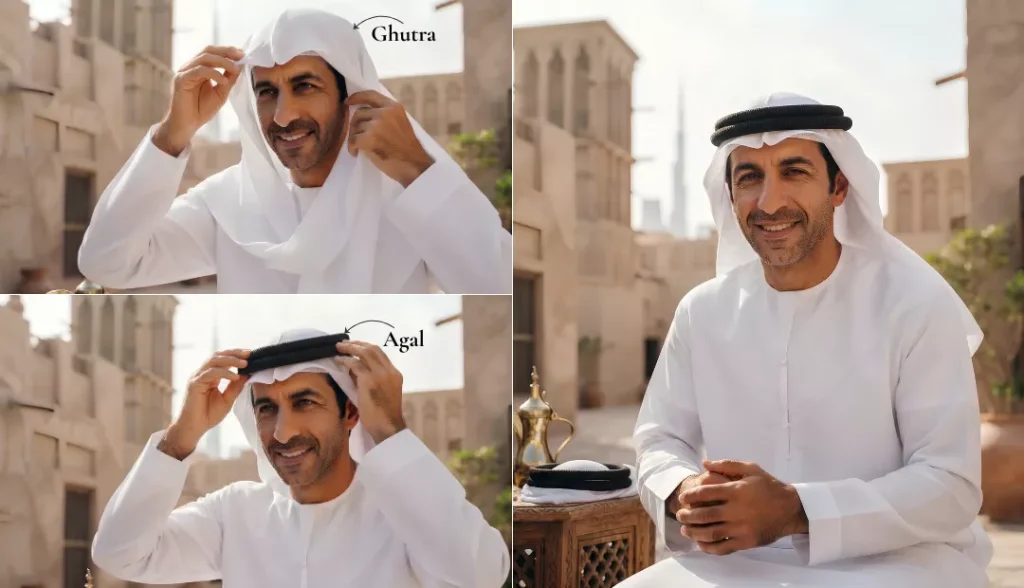
The ghutra is the traditional head covering worn with the kandura. It can be arranged in different styles, while the agal is the black cord placed over it to hold the head covering in position. Together, they are one of the most recognizable parts of Emirati men’s attire.
The Bisht: A Symbol of Formal Emirati Attire
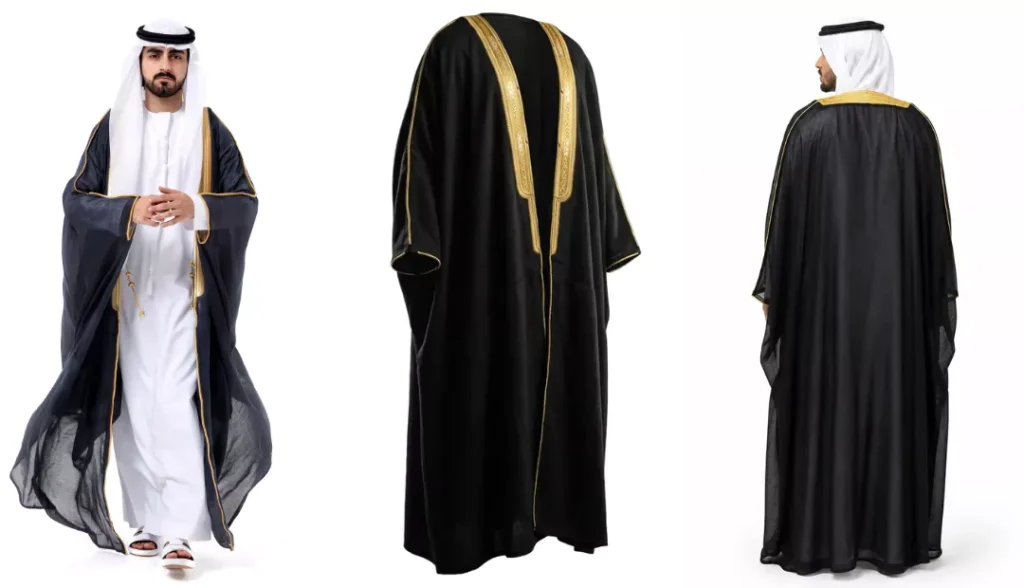
The bisht is a formal outer cloak worn over the kandura. It is open at the front and falls over the shoulders. Decorative golden or silver zari embroidery on the edges gives it a distinctive formal look.
The bisht is particularly associated with formal presentation and is worn occasionally when a more ceremonial style of dress is appropriate.
Emirati Traditional Dress for Women
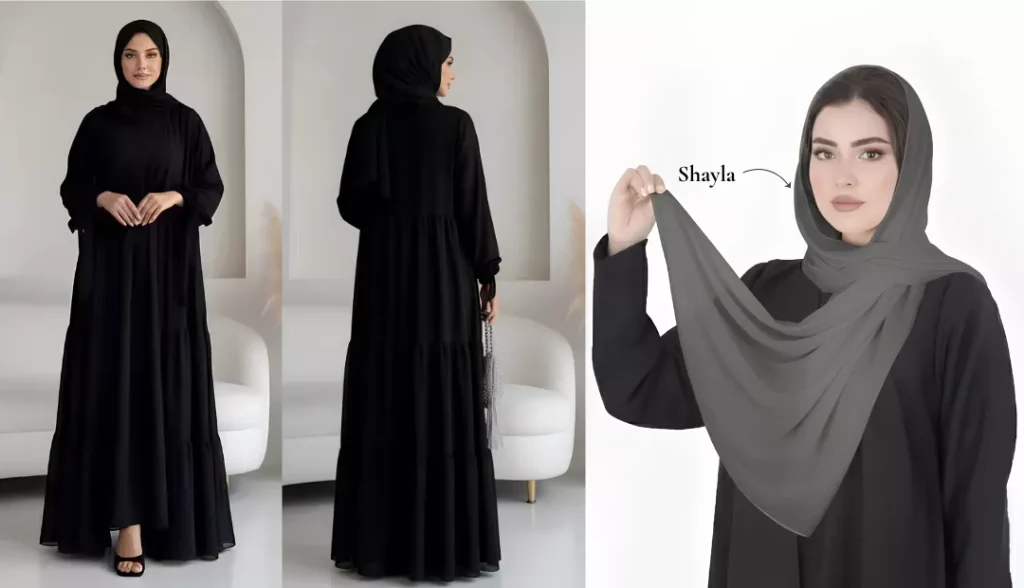
Abaya and Shayla: Traditional Emirati Women’s Dress
The abaya is the most familiar piece of Emirati women’s traditional dress. It is a long outer garment traditionally associated with black fabric and worn over other clothing. The shayla is a headscarf worn with it.
The modern abaya is not a changed representation of historical Emirati clothing. Its cut, embroidery, embellishment, and styling have developed with contemporary fashion, while the garment remains an important part of Emirati dress.
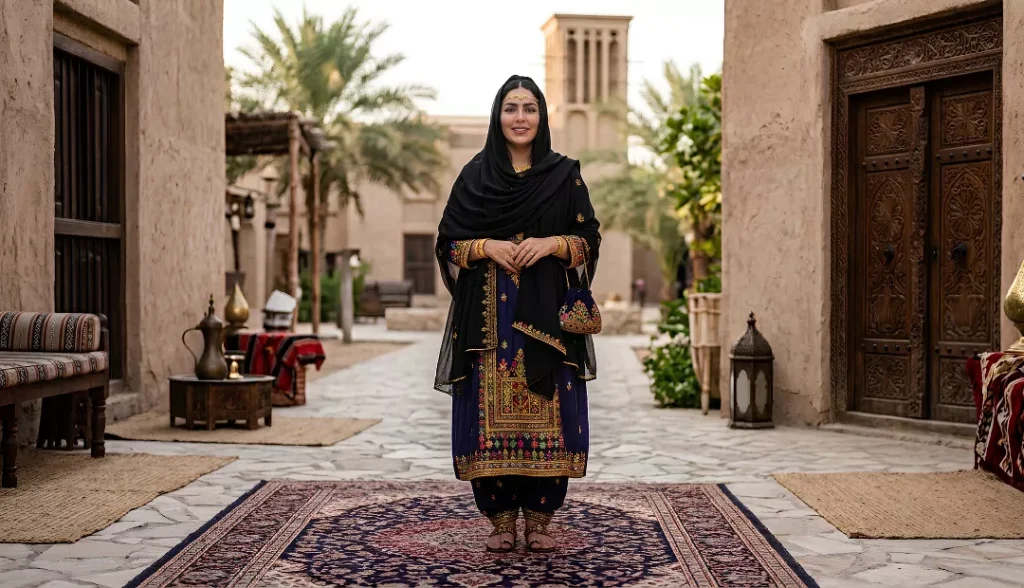
Colorful Traditions: Emirati Thawb and Sirwal
Traditional Emirati women’s clothing included a colorful and long-sleeved thawb, usually decorated on the edges of the neckline and sleeves. It was worn with sirwal, which are wide trousers decorated with intricate embroidery and patterned designs.
These garments indicate that traditional Emirati dress is far more diverse than the modern black abaya. Historical women’s clothing incorporates a wide range of elements such as layers, colors, embroidery, and detail.
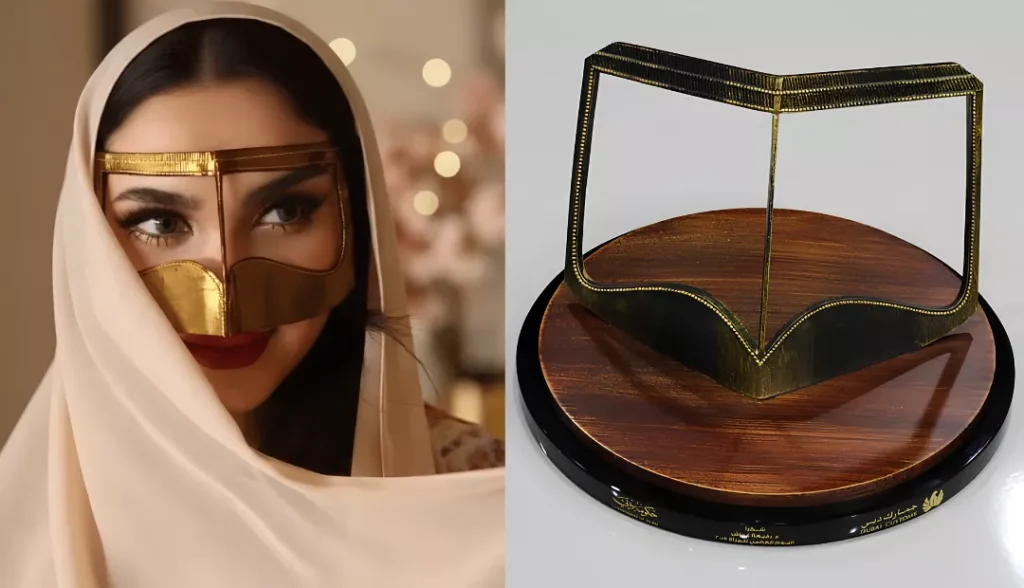
Battoulah: Traditional Emirati Facial Covering
The traditional Emirati facial mask known as a battoulah is a distinctive face covering traditionally worn by Emirati women. It differs from the full-body covering commonly referred to as a burqa in many Islamic countries. The battoulah is a unique part of traditional clothing in the UAE, mainly among older generations, although it has gradually lost popularity among young women over recent decades.
Craftsmanship and Talli in Traditional Emirati Dress
Craftsmanship is one of the significant aspects of traditional Emirati dress. Detailed patterns on fabric, fine stitching, embroidery, and finishing add cultural value to the outfit and make it stand out.
In addition, Talli is another example of preserving cultural knowledge through clothing. It refers to a traditional Emirati textile craft, which is created by twisting and braiding threads into narrow decorative bands. It is used on women’s clothes such as collars, cuffs, and hems. Traditional talli used metallic threads, while modern versions often use synthetic metallic materials.
The Cultural and National Significance of Emirati Dress
Emirati clothing is characterized by its cultural as well as its national appeal. Traditional clothing, such as the kandura, ghutra, and abaya, is not limited to cultural events or museums. These garments are still part of everyday Emirati life.
At the same time, there is not a single type of traditional dress that has stayed the same. Having gone through many changes, it has developed as society, fashion and even materials have improved. Today, the modern abayas come in various patterns or cuts, while men’s kanduras come in several colors and finishes.
Conclusion
Emirati traditional dress reflects the UAE’s cultural heritage, craftsmanship, and changing way of life. Traditional attire represents more than clothing. It still links modern Emirati life with customs and craftsmanship handed down through generations. Styles, materials and designs have changed over time, but traditional outfits remain important to Emirati culture and identity.
Check Out More:
- How Men in the UAE Dress: Style Rules That Matter Most
- How Can You Make Abaya Streetwear Style Look Chic?

