

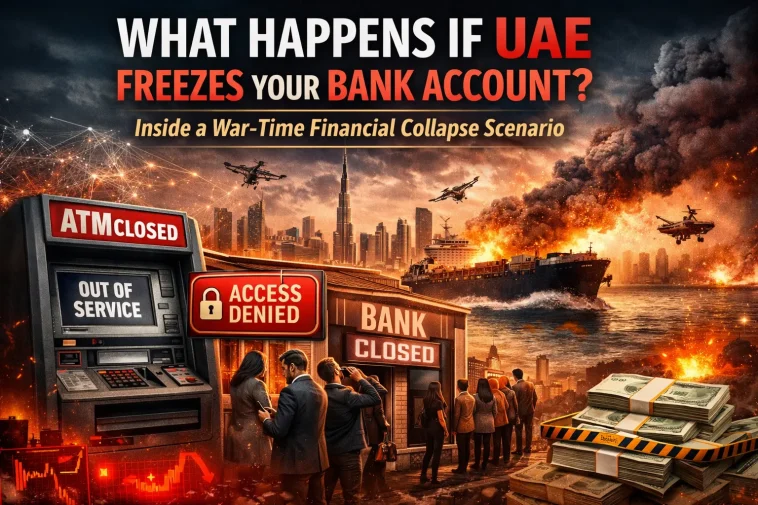
Why This Topic Suddenly Matters
Dubai not only sells Luxury but it also sells stability.
Safe money. Open economy. Easy global transfers.
But that stability depends on one fragile thing – trust.
Right now, with rising tensions involving Iran and the US, that trust is under pressure for the first time in years. And when financial hubs face geopolitical stress, the question becomes very real:
What happens if banks slow down… or worse, freeze?
First: Let’s Get Reality Straight
No, UAE has not frozen bank accounts.
But:
- Cyber threats to Gulf infrastructure are rising
- Banks are increasing security protocols
- Global institutions are reducing exposure
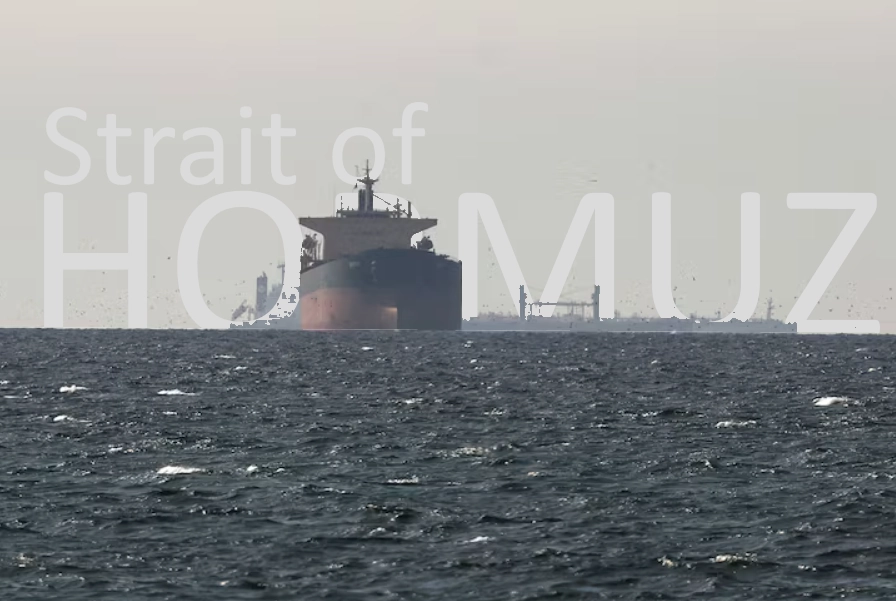
- Trade routes (like the Strait of Hormuz) are unstable
This is the early stage of financial stress, not collapse.
Phase 1 — What’s Already Starting (Soft Disruption)
1. Banking Slowdowns
- International transfers take longer
- Compliance checks increase
- High-value transactions flagged
This happens when systems move into defensive mode
2. Hidden Restrictions (Not Announced Publicly)
- Banks internally limit risk exposure
- Large outward remittances monitored
- Corporate transfers delayed
You won’t see headlines – but businesses feel it
3. Digital Vulnerability
- Banking apps may go down temporarily
- Payment gateways fail during cyber incidents
Even a few hours outage = panic
Phase 2 — Serious Measures (If Situation Escalates)
Temporary Capital Controls (Very Possible)
If pressure increases, UAE could:
- Limit money flowing out of the country
- Add approval layers for large transfers
- Slow down foreign remittances
Not permanent – but enough to disrupt business
Withdrawal & Transfer Limits
- Daily ATM limits
- Caps on online transfers
- Restrictions on business payouts
Seen globally in crisis economies
Stock Market Intervention
- Trading pauses
- Government stabilization measures
Done to prevent panic selling
Phase 3 — Extreme Scenario (Worst Case)
Temporary Bank Freeze
Chain reaction:
- Cyberattack hits banking system
- Panic withdrawals begin
- Liquidity pressure builds
Then government steps in:
- Accounts temporarily frozen
- Transfers blocked
- Only essential transactions allowed
Financial System Shock
- International payments disrupted
- Businesses unable to import/export
- Salaries delayed
Economy slows down within days
Psychological Collapse
The biggest threat isn’t technical.
It’s perception.
If people believe:
“My money isn’t safe”
- Bank runs start
- Real estate crashes
- Investors exit
🇮🇳 What This Means for Indian Businesses Entering Dubai
This is where most people think wrong.
Dubai is still one of the best expansion hubs.
But blind expansion right now = risk.
Smart Strategy (If You Want Profit + Safety)
1. Don’t Keep All Money in UAE
Biggest mistake
Do this instead:
- Maintain multi-country liquidity
- Split funds between:
- UAE
- India
- Singapore / other hubs
2. Use Layered Banking Structure
- Don’t rely on 1 bank
- Open accounts in 2–3 banks
If one system faces issue → business continues
3. Keep Offshore Backup Ready
- Maintain an offshore entity or backup account
- Route emergency payments outside UAE if needed
4. Reduce Dependency on Real Estate
Right now:
- Property looks attractive
- But it’s the first sector to crash in panic
Lease > Buy (in uncertain times)
5. Secure Supply Chain Outside the Gulf
- Don’t rely only on UAE ports
- Have alternative routes (India / SE Asia)
6. Plan Exit Liquidity (Very Important)
Ask yourself:
“If I need to move money in 48 hours, can I?”
If answer = no
You’re exposed
Short Term vs Long Term Outlook
Short Term (0–3 months)
- Volatility
- Cyber threats
- Banking friction
Manageable, not collapsing
Mid Term (3–12 months)
- Trade disruptions
- Investor caution
- Real estate slowdown
Profit opportunities + risk both
Long Term (If escalation continues)
- Structural financial changes
- Tighter capital flow rules
- Slower growth
Dubai adapts – but becomes a more controlled economy
Brutal Truth
The Reality: UAE Is Not at War With Iran
The United Arab Emirates is not directly at war with Iran.
This conflict is primarily between:
- The United States (and allies like Israel)
- And Iran
UAE is getting pulled in as a secondary actor, not a primary one.
So Dubai won’t collapse overnight.
But it can:
- Slow down fast
- Restrict money flow
- Lose investor confidence temporarily
And for businesses, that’s enough to cause damage.
Final Take
If UAE ever freezes bank activity – even partially –
it won’t be random.
It will be:
- Strategic
- Temporary
- Focused on preventing collapse
But for businesses and individuals, even a short freeze can feel like a shutdown.
Bottom Line
Dubai is still an opportunity
But now it requires strategy, not blind trust
If you plan smart:
- You can still profit massively
If you ignore risk:
- You can get trapped in it
Suggested Reads:
- Strait of Hormuz Crisis: The Tiny Waterway That Can Break the World
- How Dubai’s Cafe Culture Is Quietly Redefining Social Life in 2026
- Can Your Bank Account Be Frozen in UAE? Real Scenarios Explained
- Credit Card Traps in UAE That Can Destroy Your Salary

