

Introduction
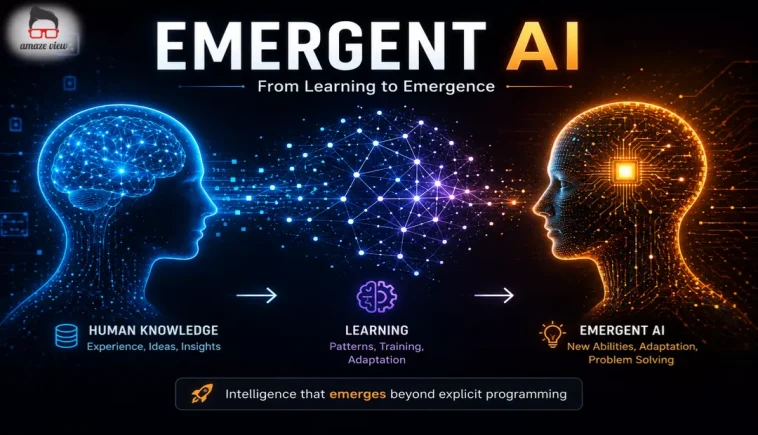
Emergent artificial intelligence (Emergent AI) is an AI system that develops new abilities through learning from given data rather than direct programming. It surprisingly performs tasks that the developer never directly programmed it to do. By emerging from the provided data, AI performs unexpected tasks. This ability is known as emergent artificial intelligence.
Understanding emergent AI is essential. It helps users know both its potential and its limitations. Using it without being aware of its benefits and drawbacks may lead to unintended outcomes. It has gained significant attention for the concept.
What Is Emergent Artificial Intelligence?
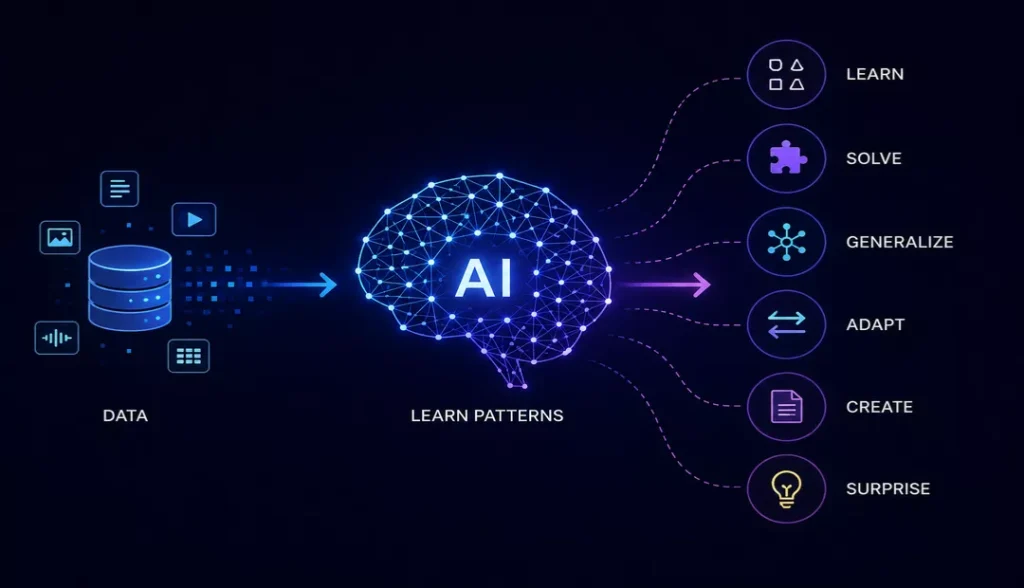
The appearance of the new capability in an AI arises when the AI learns patterns from the database. Surprisingly, these capabilities are visible when the model reaches certain scale parameters, data, and visibility.
Examples are:
- Learning complex patterns from data
- Solving unfamiliar problems
- Generalizing knowledge across tasks
- Adapting to new contexts
- Producing outputs without specific programming
- Displaying capabilities that surprise researchers
How Does Emergent AI Work?
Traditional AI follows only the instructions given in the program. For example, YouTube is designed for streaming and recommending videos. If asked to generate images, it cannot perform that task.
Whereas emergent AI learns from words, videos, and other forms of data. It automatically identifies the relations and patterns rather than memorizing the rules. Perform that task that was never programmed by developers. AI becomes smarter when it is trained with diverse and high-quality data, shaping the future of AI system.
As the AI model grows, researchers observe that improvements are sudden after reaching a certain scale. Large models improve the relationships between concepts and reasoning.
Abilities of Emergent Artificial Intelligence
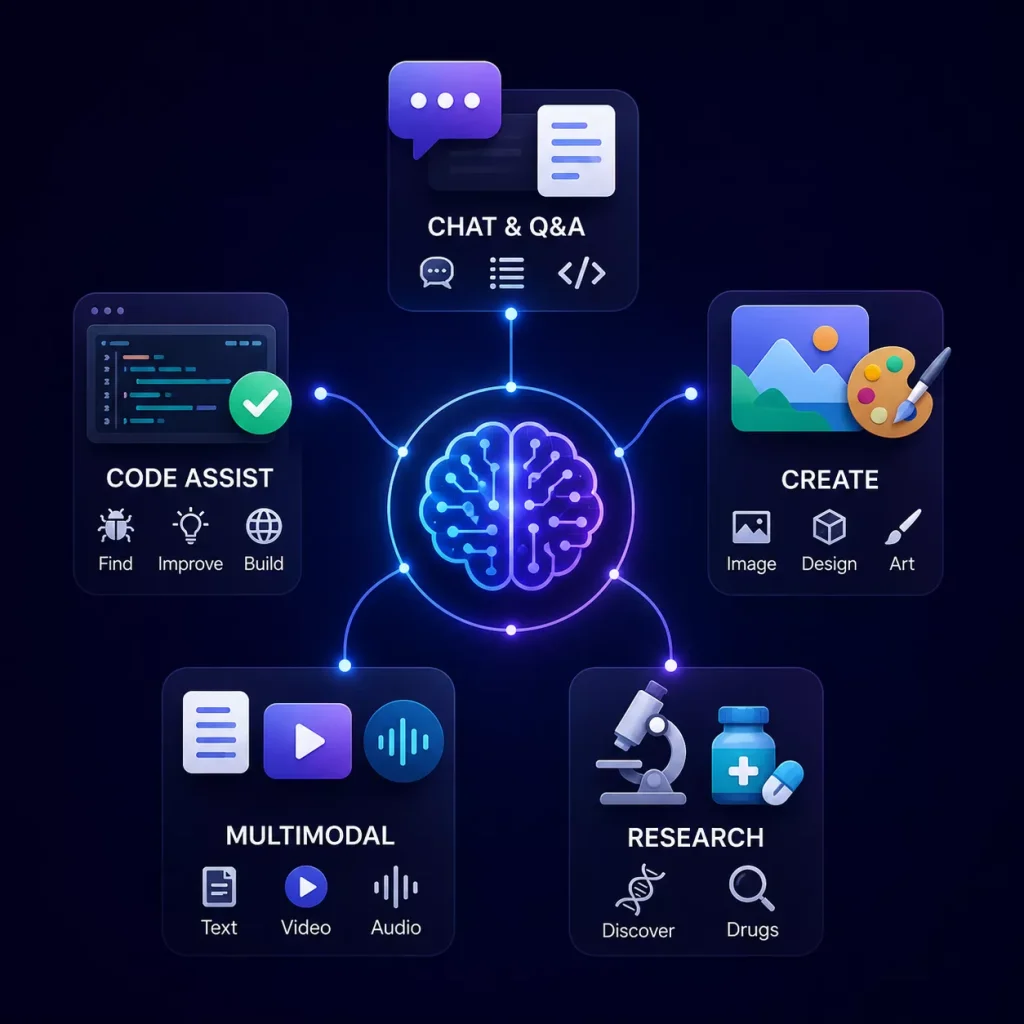
- Large language models predict patterns and answer questions, summarize information, generate code, and engage in natural conversation.
- AI explains code, detects bugs, suggests improvements, and generates websites with simple instructions.
- It can generate images, design the product, and illustrate the artwork using the given datasets.
- Combines the text, videos, and audio and performs the task across multiple scales.
- Researchers use AI for complex clinical research work and identify drug discoveries quickly.
Benefits and Challenges of Emergent AI
Benefits
- Understands the large volume of data and supports better decision-making within seconds.
- Routine tasks like generating reports, customer support, and documentation can be automated.
- Researchers can analyze complex data faster, reducing the time for discovery and innovation.
- Assist in writing, coding, and planning to improve overall productivity.
- Visual and audio assistants can respond to the customers’ questions and provide faster responses.
- AI is widely used everywhere: healthcare, finance, education, transportation, and research.
- AI is designed to work for a lengthy period, available 24/7.
Challenges
- Emergent AI generates responses based on patterns, not true understanding. So it does not understand the concept like humans do.
- Sometimes it generates inaccurate and misleading information while presenting it confidently.
- Its knowledge is limited to the data it was trained on.
- Handling sensitive data can create a risk if not managed properly.
- Biased training data can lead to biased or unfair outputs.
- AI-generated content often requires human review to ensure accuracy.
Future of Emergent AI
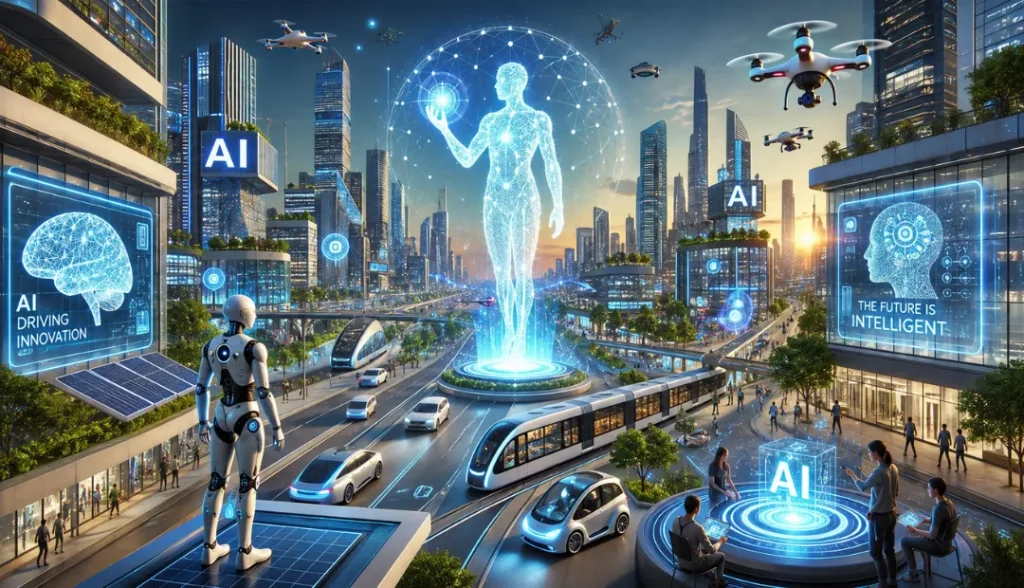
In the future, people around the world will likely accept AI because it is powerful and widely available.
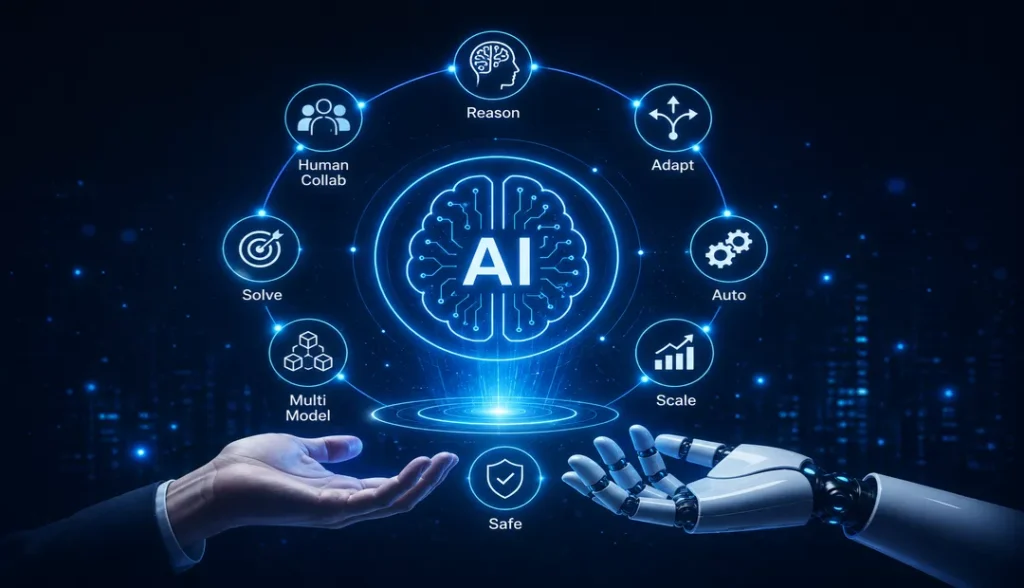
- Future AI systems will solve complex problems with minimal human assistance.
- Improving reasoning and decision-making can help AI adapt better to changing situations.
- Single models have limited data and perform better when combining multiple models.
- Advances in self-managing systems and automation can provide better adaptability.
- Human AI collaboration strengthens the relationship. Assist better rather than replace the human.
Conclusion
Emergent AI is one of the most fascinating developments in today’s technology. By combining multiple models, it develops new capabilities through large-scale data and training. AI offers many opportunities for innovation and productivity. However, it also faces challenges related to transparency, ethics, and safety.
In the future, careful development and clear guidelines can help keep AI safe and useful.

