

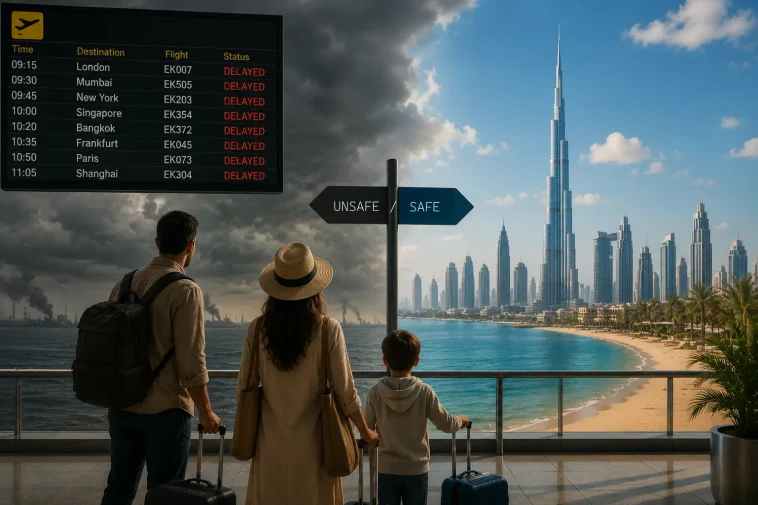
For years, Dubai has marketed itself as a destination built on safety, luxury, and stability. Travelers from Europe, Asia, North America, and beyond have viewed the city as a reliable escape where world-class attractions, modern infrastructure, and seamless travel experiences are guaranteed.
The recent Iran–US conflict put that image to the test.
Although a ceasefire has been reached and tensions appear to be easing, the bigger issue is not whether the fighting has stopped. The real question is whether travelers feel confident enough to return. In tourism, perception often matters just as much as reality.
During the conflict, concerns over regional security dominated headlines. Flight disruptions, temporary airspace restrictions, missile threats, and uncertainty across the Gulf affected travel plans for both tourists and residents. Hotels reported slower activity, airlines adjusted schedules, and many travelers chose to postpone trips until the situation became clearer.
Now, there are signs of improvement. The ceasefire has reduced fears of further escalation, governments are gradually reviewing travel advisories, and financial markets in the UAE have responded positively to expectations of greater regional stability.
Still, tourism rarely rebounds overnight.
Before booking a vacation, many travelers will continue asking important questions. Could tensions flare up again? Is the ceasefire likely to hold? Could future incidents disrupt flights or travel plans? Even after a crisis ends, these concerns can remain in people’s minds for months.
That means Dubai’s biggest challenge is not rebuilding infrastructure. Its airports, hotels, attractions, and transportation networks remain among the best in the world. The real challenge is restoring confidence.
Fortunately, Dubai has several advantages. It remains one of the world’s leading aviation hubs, enjoys strong government support for tourism, and continues to invest heavily in new attractions and large-scale developments. These strengths position the city well for recovery and may help it rebound faster than many other destinations facing similar challenges.
At the same time, the conflict has highlighted an important reality. For perhaps the first time, many international travelers saw Dubai mentioned alongside discussions of regional military tensions. Even if the city itself remained largely unaffected, that association can influence travel decisions and may take time to fade.
The most likely scenario is not a prolonged tourism collapse, nor an immediate return to record-breaking visitor numbers. Instead, Dubai is expected to experience a gradual recovery as airlines restore normal operations, travel confidence improves, and visitors become more comfortable returning to the region.
The war may be winding down, but the effort to rebuild traveler confidence is only beginning. Dubai’s long-term success will depend not only on maintaining peace and stability but also on convincing global travelers that it remains one of the safest and most attractive destinations in the world.

