

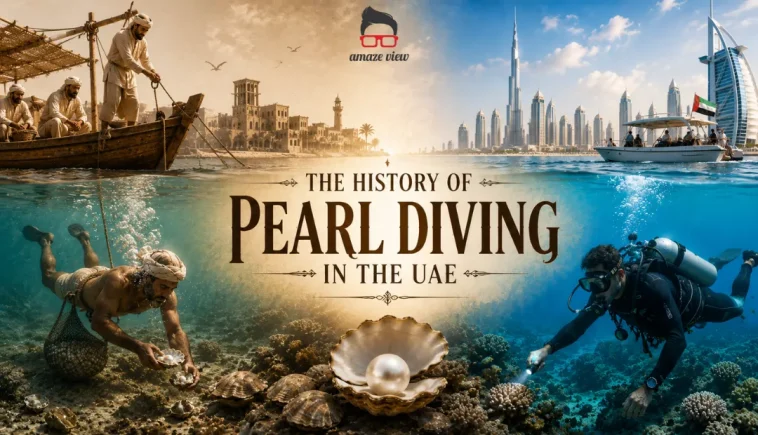
Pearl diving in the UAE is a traditional practice of free diving into the warm waters of the Arabian Gulf to collect oysters in search of natural pearls. Long before skyscrapers shaped the region, this gruelling task played a crucial role in the coastal lifestyle.
Pearling was a major part of the local economy for many generations. Before oil changed everything forever in the UAE, the communities of Abu Dhabi, Dubai and other coastal areas relied on pearling for income, trade and their livelihoods.
This guide will explain the pearl diving experience, how it changed the nation’s history and whether visitors can still experience this traditional practice today.
What Is Pearl Diving in the UAE?
Pearl diving is when people dive into the ocean, without breathing kits, to look for oysters that may contain natural pearls. Divers relied on their lung capacity, physical strength, and experience.They search the seabed by hand between coral beds and rocks for oyster shells.
Since there was no other way to determine whether the oysters contained pearls or not. Therefore, they collected as many oysters as they could in every dive. A weighted stone helped the diver descend quickly, while a rope connected him to the boat and allowed the hauler to monitor his position and help pull him back to the surface when needed.
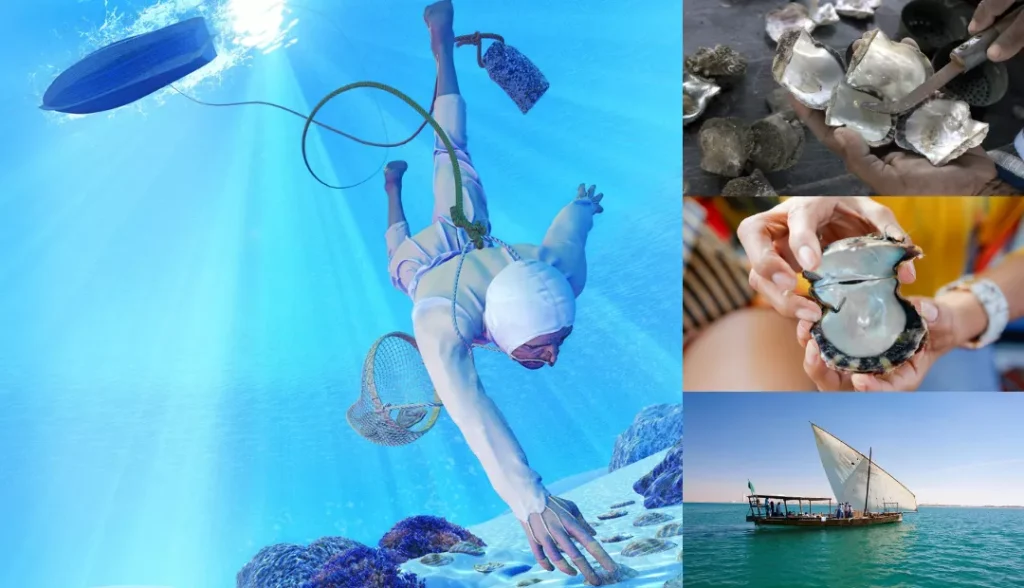
Pearl divers rarely worked on their own. Mostly, the group participated in teams aboard conventional wooden vessels called dhows. Each crew member had a specific role, such as diving for oysters, handling the diver’s rope, managing the boat, or supporting other tasks during the pearling expedition.
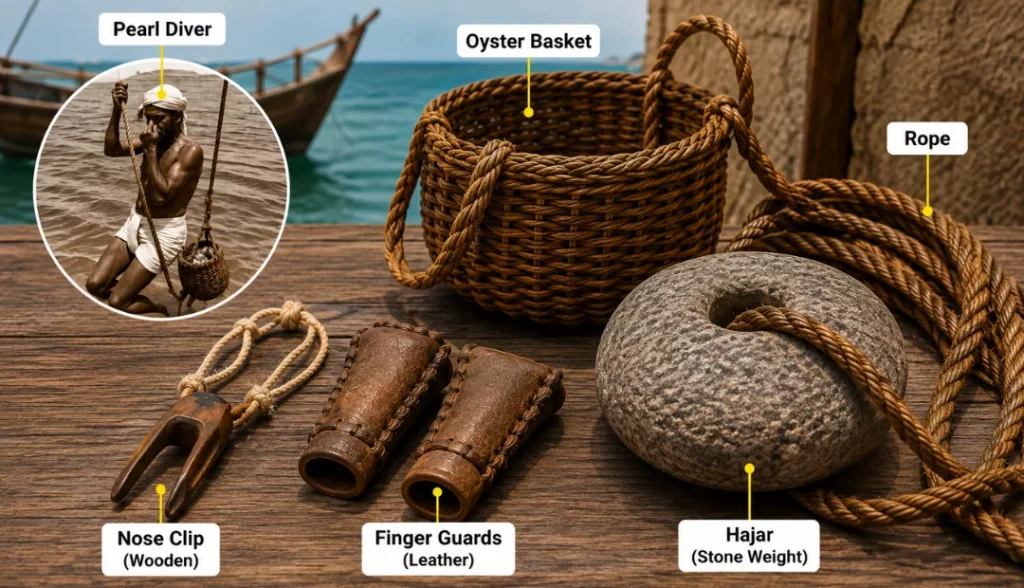
It is important to know the difference between this ancient practice and the current one. Traditional pearl divers used simple tools such as a nose clip, finger guards, a weighted stone, rope and a collection basket. They did not use modern breathing apparatus, goggles or fins.
Modern pearl farming produces pearls in controlled conditions instead of oyster harvesting, while Scuba diving is a modern recreational or professional activity using portable breathing tanks to explore underwater space for long periods.
History of Pearl Diving in the UAE
Early Origins of Pearling in the Arabian Gulf
The harvesting of pearls in the Gulf is a tradition that dates back thousands of years. The Arabian Gulf’s warm, shallow water with moderate depth created perfect conditions for oyster beds to flourish and occasionally produce natural pearls.
The Rise of the UAE’s Pearl Industry
In the late 19th and early 20th centuries, the coastline in Abu Dhabi and the Trucial States built its economy around trade. Boat builders, rope makers, and traders all relied on successful dealings. Gulf pearls were highly valued all over the world. They were traded in pearl markets across India, Persia and eventually Europe, where they were valued for their natural lustre and rarity.
Pearl Diving Before the Discovery of Oil
Before the rise of the oil industry in the mid-20th century, fishing, pearling and trade were important sources of income for coastal communities. Families planned their entire year around the time of pearling season, and the finances that it provided affected every aspect of the economy, including housing and dealings with the nearby regions.
What Was the Role of the Pearl Diver?
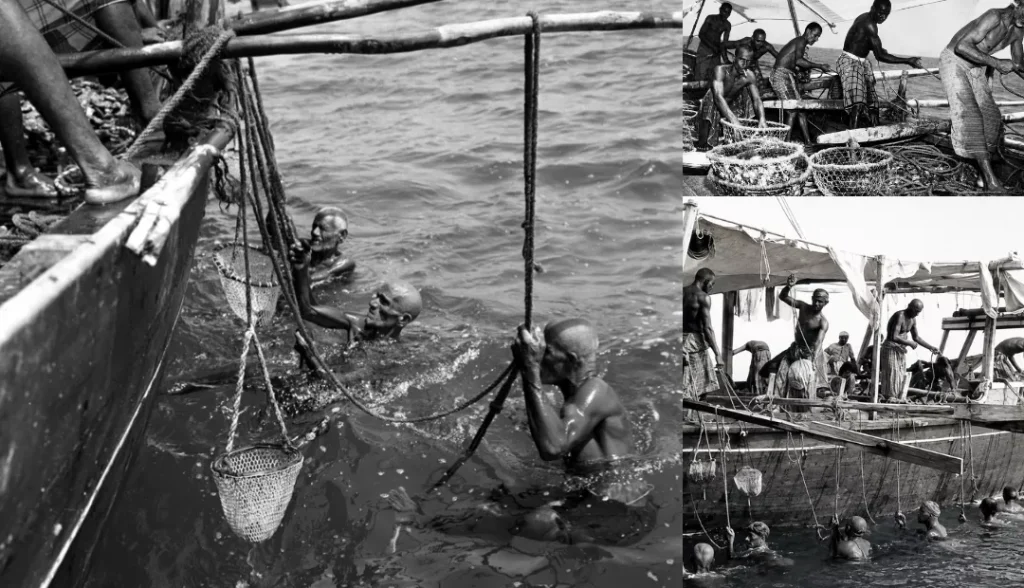
The job of a pearl diver was physically demanding. Divers dipped into the seabed and held their breath, often descending to depths of several meters, with the help of a heavy stone to speed up the descent. When they reached their lowest point, divers worked quickly and collected as many oysters as they could before needing to breathe.
Oysters were put in a woven basket or a collection bag that was tucked around the diver’s waist or neck and left their hands free to collect more. When a diver needed to return to the surface, the hauler above used the rope to help pull the diver back to the boat. The process was repeated dozens of times per day, with just a few short intervals of rest in between.
Traditional Pearl Diving Equipment
Age-old pearl diving equipment included:
- Nose clip: Made from bone, wood, or turtle shell to keep water out of the nose.
- Finger guards: Leather covers worn to protect fingers from sharp coral and shells.
- Weighted stone (hajar): Used to help divers descend quickly.
- Rope and basket: Used to collect oysters and signal the boat crew.
There were no available goggles, fins, or breathing equipment. Divers developed their breath-holding skills through years of experience and training.
How were Pearls Collected, Sorted, and Sold?
When the boats returned from sea, oysters were manually opened and examined for pearls. The majority of oysters were empty, so divers had to collect large quantities on each trip. If pearls are found, they are washed and cleaned, then sorted and graded. The tawashah or expert dealers judged each pearl by a number of points:
- Size – Larger pearls generally had higher values.
- Shape – Perfectly round pearls were the most valuable.
- Color – Ranged from white and cream to silver and rosé tones.
- Surface quality – Smooth, blemish-free surfaces were preferred.
- Lustre – The pearl’s natural shine and glow.
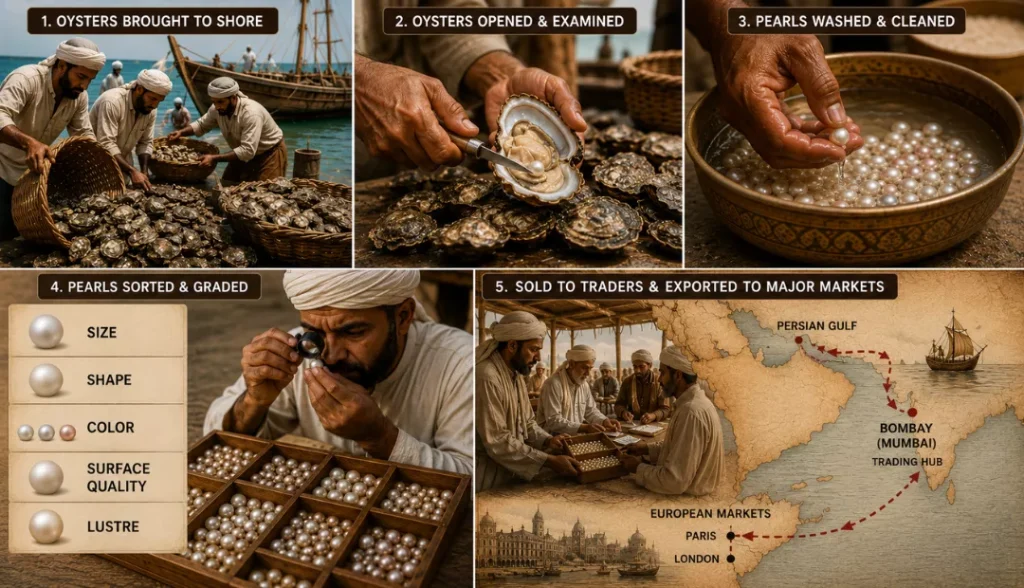
After being graded, pearls were sold to traders who exported the pearls to major markets. Market routes from the past carried Gulf pearls into Bombay (Mumbai), which was one of the trading hubs, before reaching European markets for jewelry in Paris as well as London.
What Was the Economic Importance of Pearl Diving to the UAE?
Pearls were among the Gulf region’s top exports for a number of years. They contributed to significant wealth and helped connect local communities with international markets. Before the discovery of oil, the coastal towns relied heavily on pearling to fund houses as well as food, boats and trade-related goods.
The industry was supported in numerous ways other than just divers. Boat builders constructed and maintained dhows used to travel, while merchants financed trips and handled business negotiations. Basket weavers, rope makers, and even provision providers found regular jobs during the period of the pearling season. For many families, pearling was more than a job; it was a way of life, an art passed down from generation to generation.
Where Was Pearl Diving Practiced in the UAE?
Pearl diving was carried out along the entire Arabian Gulf coast of the UAE with the main pearling centers being Abu Dhabi, Dubai and neighboring coastal areas. Abu Dhabi was one of the main pearling centers and there were plenty of pearling banks offshore.
Can You Experience Pearl Diving in the UAE Today?
Yes, but it’s a very different experience from its old roots. Visitors can learn about historic pearl diving techniques from experienced guides and see demonstrations at a number of heritage villages and cultural centers around the UAE, including Abu Dhabi and Dubai. Some tour operators also offer dhow cruises that pair stories with the opportunity to free-dive in a safe and controlled environment.
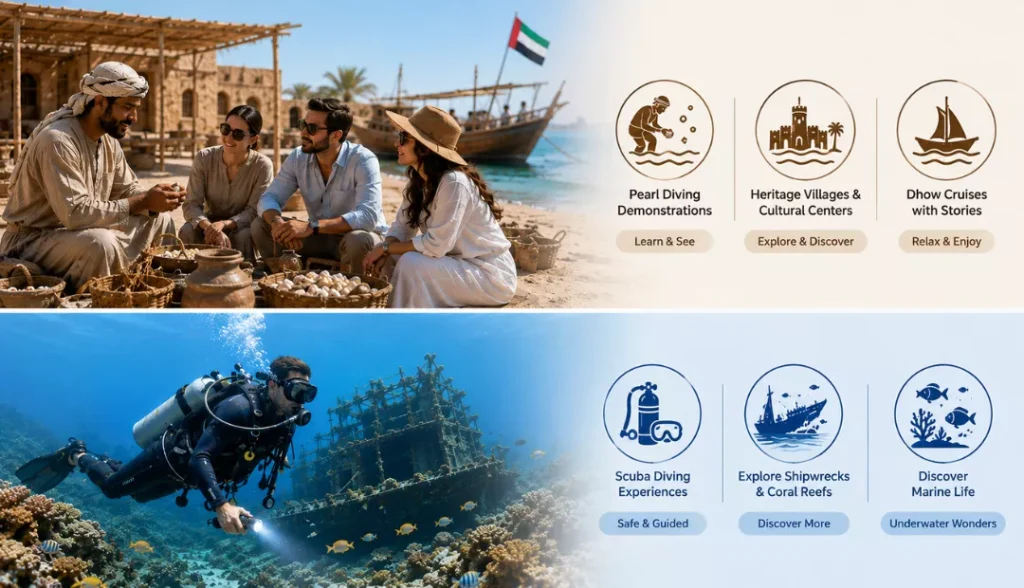
If you are interested in modern underwater exploration, scuba diving operators in Dubai offer guiding experiences. They offer tips to explore shipwrecks, coral reefs, and marine life with supportive gear. This is different from the conventional free-diving experience, yet provides a wonderful opportunity to dive into similar water.
Conclusion
Pearl diving in the UAE is not just an ancient practice. It shows the resilience and community spirit that helped to shape the country long before the arrival of oil wealth. It ranges from free-diving with no equipment to creating an entire economy that revolves around natural pearls. Although commercial pearl diving has disappeared, its legacy remains an important part of the UAE’s cultural heritage.
Check out more:
- Burj Al Arab Closure: The Truth Behind the News
- 5 Dine-Out & Night Escape Spots in Jumeirah Worth Experiencing
- Places to Visit in Dubai For Free Without a Budget Worry

